Simple, advanced and qualified electronic signatures: what eIDAS says and when the simple one is enough
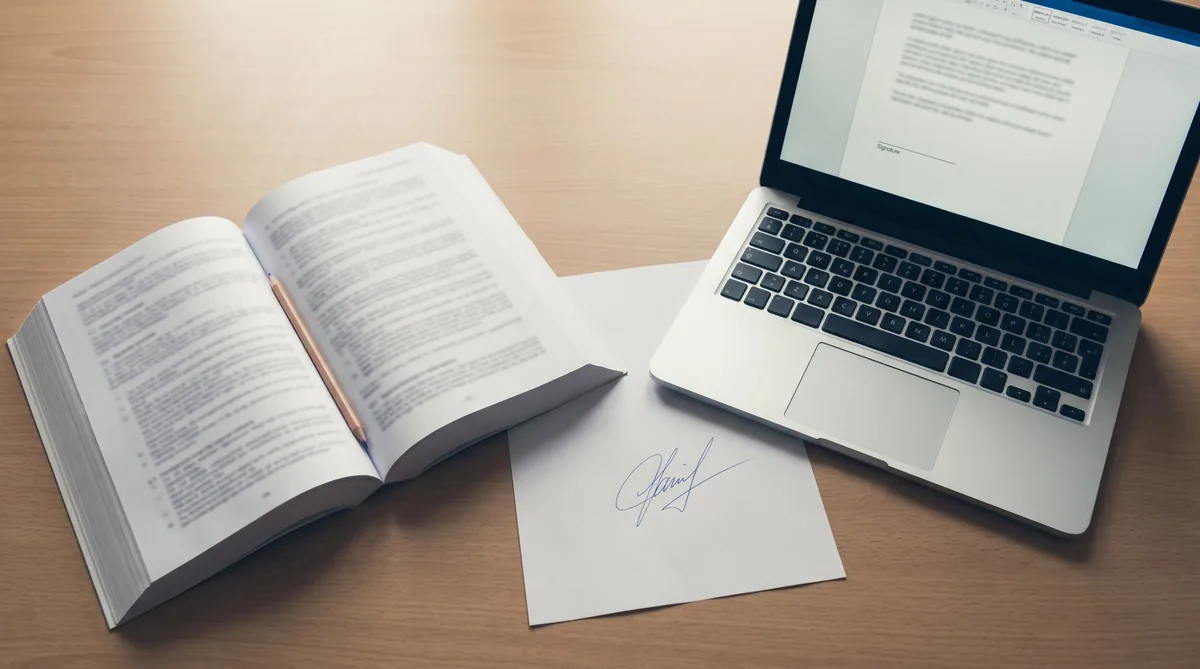
A simple electronic signature counts as evidence. The European eIDAS regulation says so in its article 25.1, and in Spain Ley 6/2020 and article 326 of the Civil Procedure Act (Ley de Enjuiciamiento Civil, LEC) complete it. What changes between a simple signature and a qualified one is not whether it is valid, but who has to prove what if someone disputes it.
How this is written. It is information, not legal advice. Everything quoted is copied from the BOE, read on 23 September 2026. The links are at the end. The literal quotations are in Spanish, the language of the official text, each with its reference and a gloss in English. If your case raises doubts, consult a lawyer.
Quick answer
| Question | What the rule says |
|---|---|
| Is a simple electronic signature valid? | Yes. It cannot be denied legal effect or admissibility as evidence because it is electronic or because it is not qualified (eIDAS, art. 25.1). |
| Which one is equivalent to a handwritten signature? | The qualified one: «tendrá un efecto jurídico equivalente al de una firma manuscrita» (art. 25.2). |
| What does the advanced one require? | Four requirements, among them that the signatory controls exclusively the data used to sign (art. 26). |
| And if someone denies having signed? | With a non-qualified service, whoever presents the document proves it by any useful means (LEC, art. 326.3 and 326.2). With a qualified one, it is presumed (art. 326.4). |
| And if nobody disputes it? | A private document is full proof if its authenticity is not challenged (LEC, art. 326.1). |
What eIDAS says, word for word
Regulation (EU) 910/2014, known as eIDAS, defines three levels.
Electronic signature (art. 3.10): data in electronic form attached to or logically associated with other electronic data, which the signatory uses to sign. «los datos en formato electrónico anejos a otros datos electrónicos o asociados de manera lógica con ellos que utiliza el firmante para firmar».
Advanced electronic signature (art. 3.11): the one that meets article 26. There are four requirements:
- a) it is uniquely linked to the signatory: «estar vinculada al firmante de manera única»;
- b) it allows the signatory to be identified: «permitir la identificación del firmante»;
- c) it was created using signature-creation data that the signatory can use, with a high level of confidence, under their sole control: «haber sido creada utilizando datos de creación de la firma electrónica que el firmante puede utilizar, con un alto nivel de confianza, bajo su control exclusivo»;
- d) it is linked to the data signed in such a way that any later change is detectable: «estar vinculada con los datos firmados por la misma de modo tal que cualquier modificación ulterior de los mismos sea detectable».
Qualified electronic signature (art. 3.12): an advanced signature created by a qualified signature-creation device and based on a qualified certificate. «una firma electrónica avanzada que se crea mediante un dispositivo cualificado de creación de firmas electrónicas y que se basa en un certificado cualificado de firma electrónica».
And the article that matters, 25.1. In English: legal effect and admissibility as evidence in court proceedings cannot be denied to an electronic signature merely because it is an electronic signature or because it does not meet the requirements of the qualified electronic signature.
«No se denegarán efectos jurídicos ni admisibilidad como prueba en procedimientos judiciales a una firma electrónica por el mero hecho de ser una firma electrónica o porque no cumpla los requisitos de la firma electrónica cualificada.»
25.2 reserves equivalence with the handwritten signature for the qualified one.
eIDAS was reformed in 2024 by Regulation (EU) 2024/1183. That reform deletes article 25.3 (recognition of the qualified signature between Member States) and does not touch 25.1 or 25.2.
The three, in a table
| Simple | Advanced | Qualified | |
|---|---|---|---|
| What it is | Electronic data the signatory uses to sign (art. 3.10) | Simple + the 4 requirements of art. 26 | Advanced + qualified device + qualified certificate (art. 3.12) |
| Can it be denied effect for being electronic? | No (art. 25.1) | No (art. 25.1) | No (art. 25.1) |
| Is it equivalent to the handwritten one? | The rule does not say so | The rule does not say so | Yes (art. 25.2) |
| If it is challenged, in Spain | Whoever presents the document proves it (LEC 326.3) | The same, unless a qualified trust service was used (LEC 326.4) | It is presumed to have the feature in dispute (LEC 326.4) |
What changes in Spain: who proves
Ley 6/2020, article 3.2, refers to the Civil Procedure Act. In English: the evidence of private electronic documents where a non-qualified trust service was used is governed by section 3 of article 326 of Ley 1/2000; if the service was qualified, section 4 of the same article applies.
If this is your case: What Xera does for your business (ES) →
«La prueba de los documentos electrónicos privados en los que se hubiese utilizado un servicio de confianza no cualificado se regirá por lo dispuesto en el apartado 3 del artículo 326 de la Ley 1/2000 […]. Si el servicio fuese cualificado, se estará a lo previsto en el apartado 4 del mismo precepto.»
And article 326 of the LEC says three things that are best read together:
- If nobody disputes it, it is valid: private documents «harán prueba plena en el proceso […] cuando su autenticidad no sea impugnada por la parte a quien perjudiquen» (326.1), that is, they are full proof when the party they harm does not challenge their authenticity.
- If it is disputed and the service is not qualified, section 2 is followed: whoever presented the document may «proponer cualquier otro medio de prueba que resulte útil y pertinente» (326.2 and 326.3), that is, propose any other useful and relevant means of proof.
- If the service is qualified, «se presumirá que el documento reúne la característica cuestionada» (326.4): the document is presumed to have the feature in question.
Put plainly: with a simple signature, the burden of proving the signature is yours if the other party denies it. That is why what matters about a simple signature is not the scribble: it is the evidence that goes with it.
When a simple signature is enough between businesses
With the rule in front of you, a simple signature is reasonable when two things hold:
- Nothing requires another level. If a rule, the authorities or the other party ask for an advanced or qualified signature, the simple one will not do. eIDAS itself allows a Member State to require an advanced signature for online public-sector services (art. 27.1).
- You can prove who signed if needed. That is, you keep for each signature the IP, the date and time of each step, the email the link was sent to, the browser and the full event log.
Typical examples: the quote a client accepts, the services contract with a supplier, the engagement letter (hoja de encargo) before starting a job.
And when not: any document for which a certificate is requested.
Are digital signature and electronic signature the same?
In everyday speech the two terms are used interchangeably, which is why many people search for "digital signature" when what they want is to send a contract to be returned signed. The European rule speaks only of electronic signatures, with the three levels above: "digital signature" is not an eIDAS category.
Signing with a certificate —the FNMT one, the DNIe one— using a program such as Autofirma is a different thing. That is what is usually needed for procedures with the authorities, and it is not what we do: our signature is simple, without a certificate, and is suitable for quotes, service contracts and engagements.
Our electronic signature
At Proxera we offer a simple electronic signature. We do not sell it as advanced or qualified. It keeps the IP, time, email, browser and audit log of each signature, and the data is on our own server, in Finland.
The sign-up is requested from the electronic signature page, which is in Spanish.
€30/month with 50 documents, with your own branding on your page and documents. No minimum term. Excluding VAT. If your document needs an advanced or qualified signature, we tell you so and we do not sell it to you.
Request your Proxera electronic signature sign-up →
Sources
- Regulation (EU) 910/2014 (eIDAS), OJ L 257 of 28-8-2014, arts. 3, 25, 26 and 27:
https://www.boe.es/doue/2014/257/L00073-00114.pdf - Regulation (EU) 2024/1183, amending eIDAS (point 23: deletion of art. 25.3):
https://www.boe.es/buscar/doc.php?id=DOUE-L-2024-80608 - Ley 6/2020, of 11 November, art. 3: https://www.boe.es/buscar/act.php?id=BOE-A-2020-14046
- Ley 1/2000, Civil Procedure Act, art. 326: https://www.boe.es/buscar/act.php?id=BOE-A-2000-323
AI in action
Want to see XERA in action?
Talk directly to XERA and find out how it can automate the repetitive tasks in your business.
No commitment
Prefer it with a fixed day and time?
Book a video call (in Spanish)Pick a slot and the invitation reaches you straight away. The booking page is in Spanish.
Related content
Automate Your Accounting Firm in 2026: A Practical Guide for Professional Practices
A practical guide to automating your accounting and tax advisory firm or professional practice in 2026. What to automate, where to start and how XERA can help without changing your tax software.
2026 Personal Income Tax (IRPF) Checklist for Accounting Firms: Calendar, Documentation and Errors That Cost Penalties
A 2026 IRPF checklist for accounting firms: the tasks before, during and after the campaign. Avoid the chaos of April to June.